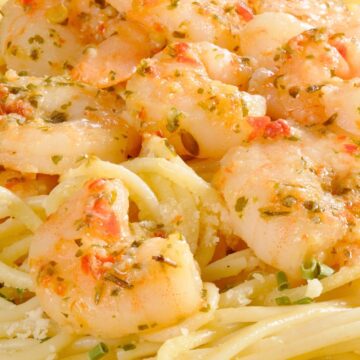
Shrimp Scampi for an Easy Dinner
High Protein Shrimp Scampi features tender shrimp with garlic, butter, white wine, and lemon juice tossed with linguine. Ready in 45 minutes.
Ingredients
- 1 package (16 ounce) linguine pasta
- ¼ cup olive oil
- ¼ cup butter
- 6 cloves garlic minced
- 1 pound shrimp peeled and deveined
- ¾ cup white wine
- ½ cup lemon juice
- ¼ teaspoon crushed red pepper flakes
- 1 tablespoon fresh basil leaves chopped
- ½ teaspoon salt
- 2 tablespoon Pecorino Romano cheese grated
- 1 tablespoon chopped fresh parsley
Instructions
- Fill a large pot with lightly salted water.
- Place the pot over high heat and bring to a rolling boil.
- Add the linguine to the boiling water and stir.
- Cook the linguine for about 11 minutes, stirring occasionally.
- Test the pasta to make sure it is cooked through but still firm to the bite.
- Place a colander in the sink. Pour the pasta into the colander to drain.
- Transfer the drained linguine to a large mixing bowl.
- Add the olive oil and butter to a large skillet. and place the skillet over medium heat.
- Heat until the butter melts completely.
- Add the minced garlic to the skillet.
- Cook the garlic for 2 to 3 minutes, stirring constantly.
- Add the shrimp to the skillet.
- Cook the shrimp for 4 to 5 minutes, stirring frequently.
- Add the wine, lemon juice, red pepper flakes, basil, and salt to the skillet and Cook for 1 more minute.
- Remove the skillet from the heat.
- Pour the shrimp mixture over the linguine in the bowl.
- Sprinkle the Pecorino Romano cheese over the pasta.
- Sprinkle the parsley over the pasta.
- Toss everything together until well mixed.
- Serve immediately.
Notes
Tips and Tricks
Don't Overcook the Shrimp - Shrimp cooks very quickly and becomes tough if left in the pan too long. Remove the skillet from heat as soon as the shrimp turns pink and opaque, which usually takes 4 to 5 minutes. Save Some Pasta Water - Before draining the linguine, save about ½ cup of the pasta cooking water. If the sauce seems too thick when you toss everything together, add a few tablespoons of the reserved water to loosen it up. Use Fresh Garlic - Fresh minced garlic makes a big difference in this recipe. Pre-minced garlic from a jar doesn't have the same flavor and can taste bitter when cooked. Dry the Shrimp - Pat the shrimp dry with paper towels before adding them to the skillet. This helps them brown better instead of steaming in their own moisture. Serve Immediately - This dish tastes best when served right away. The pasta can absorb too much sauce if it sits for too long, and the shrimp can become rubbery as it cools. Adjust the Heat Level - If you don't like spicy food, reduce the red pepper flakes to just a pinch or leave them out completely. If you want more heat, add up to ½ teaspoon.Storage and Reheating
Refrigerator Storage - Store leftovers in an airtight container in the refrigerator for up to 3 days. Let the shrimp scampi cool completely before transferring it to the container. Freezer Storage - Freeze the shrimp scampi in a freezer-safe container for up to 2 months. The texture of the shrimp may change slightly after freezing, but the dish will still taste good. Reheat on Stovetop - Place a serving in a large skillet with 2 to 3 tablespoons of water or chicken broth. Warm over medium-low heat, stirring gently until heated through. Reheat in Microwave - Transfer a portion to a microwave-safe dish. Add 1 tablespoon of water or broth. Cover the dish and microwave on medium power for 1 to 2 minutes, stirring halfway through. Thaw Frozen Shrimp Scampi - Move the container from the freezer to the refrigerator the night before you plan to eat it. Let it thaw completely in the refrigerator before reheating.Nutrition
Calories: 707kcalCarbohydrates: 69gProtein: 33gFat: 30gSaturated Fat: 8gCholesterol: 289mgSodium: 652mgPotassium: 550mgFiber: 5gSugar: 1gCalcium: 114mgIron: 7mg
Tried this recipe? Let us know what you think!Mention @nestinglaneindulge or tag #nestinglaneindulge!