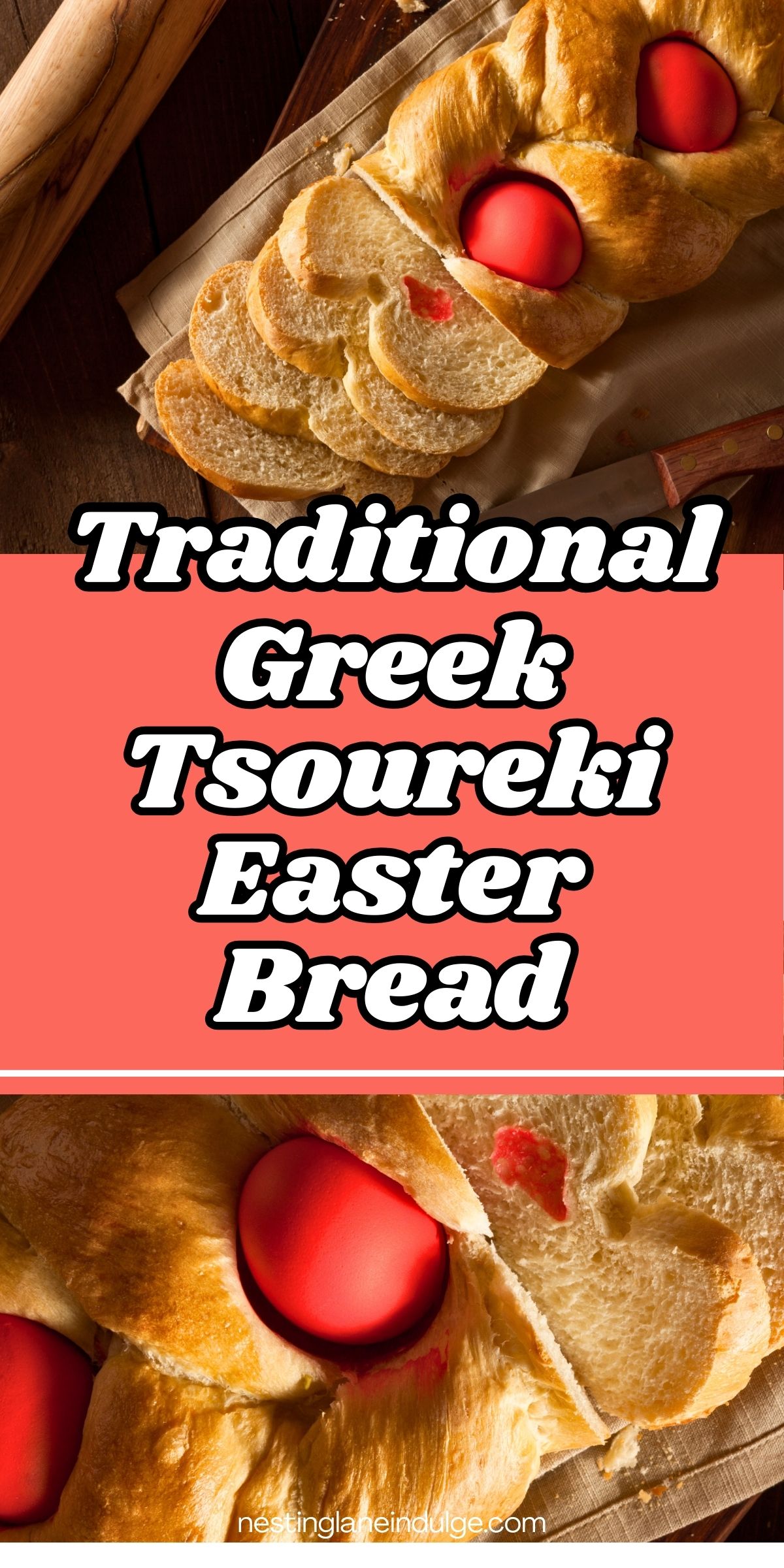
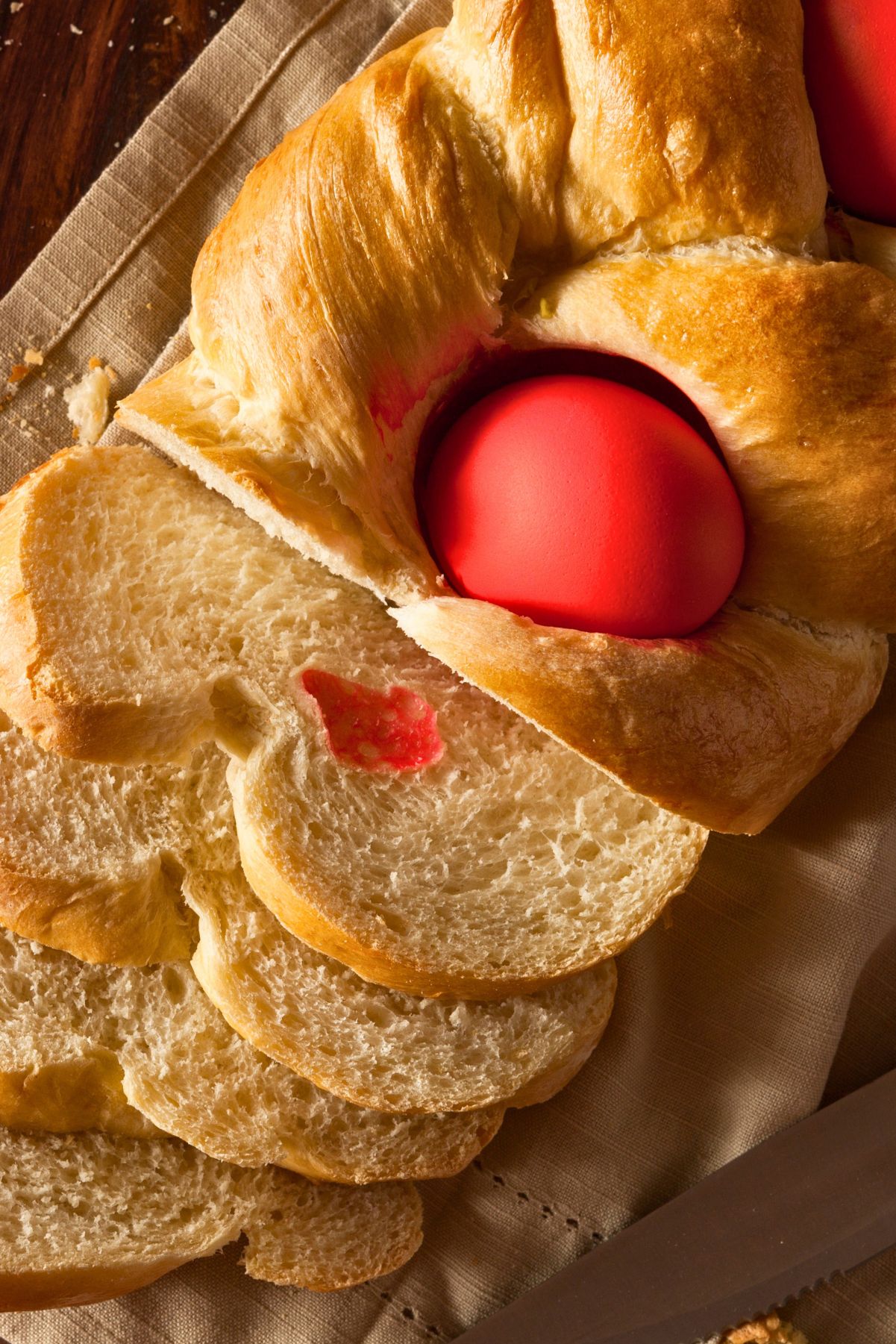
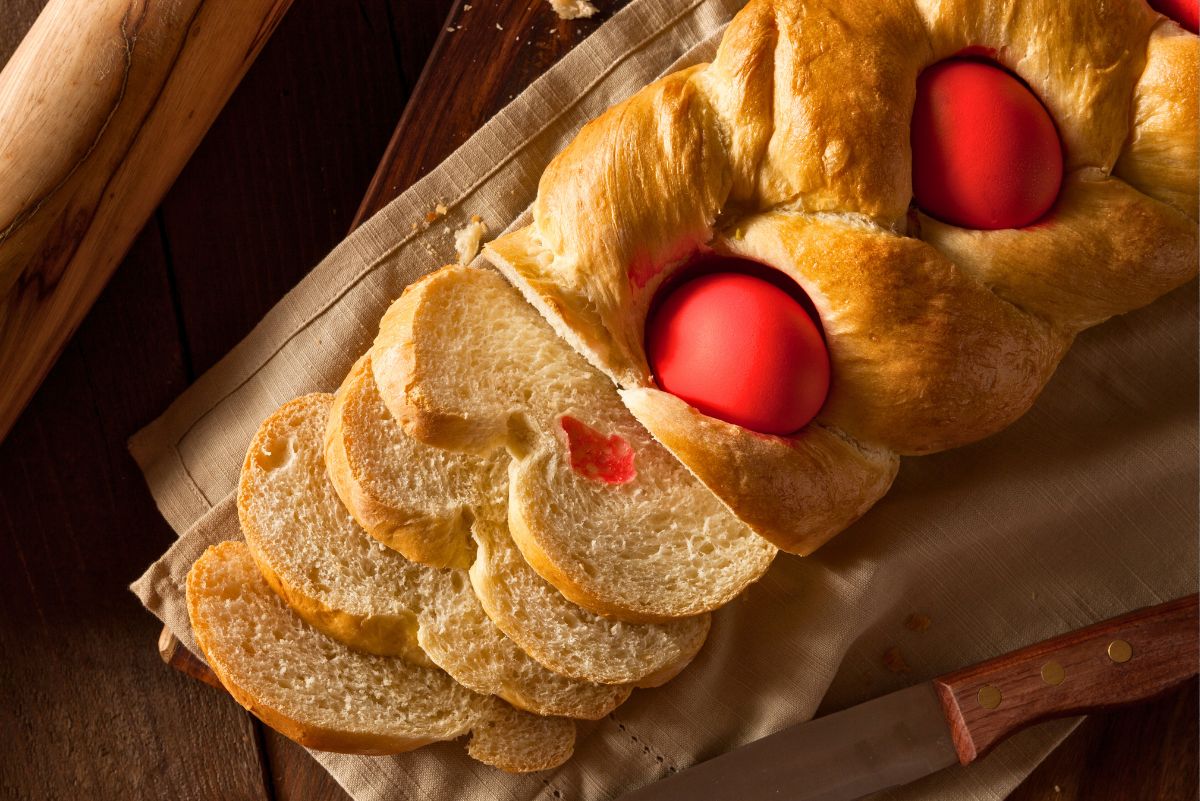
Traditional Greek Tsoureki Easter Bread is a sweet, braided bread that’s been part of Greek holiday celebrations for generations.
This bread stands out because of its unique combination of orange zest, anise seed, and finely ground almonds that create a flavor you won’t find in regular bread.
The dough is soft and slightly sweet, and when you braid it into three loaves, it becomes a centerpiece for any holiday table.
You’ll need milk, active dry yeast, bread flour, sugar, almonds, salt, orange zest, anise seed, ground masticha, butter, and eggs for the dough. The glaze requires an egg yolk, milk, and slivered almonds.
The process involves proofing the yeast, mixing the dough, letting it rise twice, braiding the loaves, and baking until golden brown. The result is three beautiful loaves with a golden, shiny top and a tender crumb inside.
This bread takes some time because of the rising periods, but the actual hands-on work isn’t complicated. The smell of orange and anise filling your kitchen makes the wait worth it.
Whether you’re celebrating Easter or just want to try something different, this bread brings a taste of Greek tradition to your home.
Why You’ll Love This Traditional Greek Tsoureki Easter Bread
It’s a Showstopper
This bread looks impressive with its braided shape and golden glaze. When you bring it to the table, people notice. It makes any meal feel special.
The Flavors Are Unique
Orange zest, anise seed, and masticha create a flavor combination you don’t find in everyday bread. It’s sweet but not too sweet, and the spices give it character without being overpowering.
It Makes Three Loaves
This recipe gives you three loaves, which means you can share with friends and family or freeze extras for later. It’s great for gatherings or for giving as gifts.
The Texture Is Perfect
The bread comes out soft and tender on the inside with a slightly crispy, golden crust on the outside. Each slice pulls apart easily and has a light, airy texture.
It’s Part of a Tradition
Making this bread connects you to Greek culture and generations of bakers who’ve made it for Easter celebrations. It’s a recipe with history and meaning behind it.
A large mixing bowl and a sturdy work surface are helpful when kneading this dough. Loaf pans keep the braided loaves in shape during the second rise and make cleanup easier.
Ingredient Substitutions
Bread Flour
Use all-purpose flour if you don’t have bread flour. The texture will be slightly different but still good. You may need to adjust the amount slightly.
Active Dry Yeast
Instant yeast works in place of active dry yeast. Use the same amount and you can skip the proofing step in step 1.
Almonds
Leave out the almonds if you have a nut allergy or don’t like them. The bread will still turn out well. You can also try finely chopped walnuts instead.
Orange Zest
Lemon zest can replace orange zest if that’s what you have. The flavor will be brighter and more citrusy but still delicious.
Anise Seed
Try fennel seed if you don’t have anise seed. The flavor is similar but slightly milder. You could also use a small amount of ground cardamom for a different spin.
Masticha
Skip the masticha if you can’t find it. It adds a unique flavor, but the bread is still excellent without it.
Butter
Use vegetable oil or melted coconut oil instead of butter. The flavor will be slightly different but the texture will be similar.
Affiliate Disclosure: Some links provided may be affiliate links where I may earn a commission if you purchase something after clicking on a link. No extra cost is added to you. Also, as an Amazon Associate, I earn from qualifying purchases made through links.
Traditional Greek Tsoureki Easter Bread
Equipment
Ingredients
- 2 cups milk
- 2 envelope (.25oz each) active dry yeast
- 8-9 cups bread flour
- 1¾ cup sugar
- 1 cup almonds very finely chopped (optional)
- 1 teaspoon salt
- 1 orange, zest of grated
- 2 teaspoon anise seed finely ground
- 1 teaspoon ground masticha optional
- ¼ cup melted butter
- 5 eggs very well beaten
Glaze:
- 1 egg yolk
- 2-3 tablespoon milk
- ½ cup slivered almonds
Instructions
- Heat the milk until warm.
- Pour the warm milk into a large mixing bowl, add the yeast, one cup of the flour and ¼ cup of the sugar to the bowl.
- Stir the mixture together.
- Cover the bowl with a cloth. Allow the mixture to proof for one hour.
- In a second large mixing bowl, add seven cups of flour, the ground almonds, the salt, the remaining sugar, orange zest, anise seed, and masticha (if using)
- Stir the dry ingredients together. Make a well in the center of the flour mixture.
- Pour the yeast mixture, melted butter, and beaten eggs into the well.
- Start stirring from the center of the well. Gradually bring the flour into the center as you stir until a dough begins to form
- Sprinkle a little of the remaining flour onto a work surface. Place the dough onto the floured surface.
- Knead the dough for about 12 minutes. Add more flour as needed while kneading. Continue kneading until the dough is smooth. Stop kneading when the dough no longer sticks to your hands.
- Oil a large bowl. Place the dough in the oiled bowl. Cover the bowl with a cloth. Set the bowl in a warm place away from drafts.
- Allow the dough to rise until it doubles in size, about two hours.
- Punch down the dough with your fist.
- Divide into nine small balls and roll each into strips 10-12 inches long, and about 2 inches in diameter. Lay three strips side by side, pinching together at one end, and braid. Pinch together at the other end to hold the loaf intact.
Optional: Now you can press a red-dyed egg between the strips of the braid or just leave the braided loaf plain.
- Repeat the procedure to make the second and third loaves.
- Place the loaves on parchment lined baking sheets, covered with a clean cloth, and let rise for two hours, or until doubled in bulk.
- While the braids are rising, preheat oven to 340F (170°C), placing rack in middle rack of oven.
- Beat together the egg yolk and rest of the milk. Brush over loaves and sprinkle with slivered almonds.
- Bake for 35-40 minutes or until golden brown, checking after 15 minutes. If the loaves are browning too quickly, cover them loosely with aluminum foil.
- Remove the loaves from the oven when they sound hollow when tapped on the bottom.
- Place the loaves on cooling racks and allow to cool completely.
Notes
Tips and Tricks
Check Water Temperature – Make sure the milk is warm but not hot when you add the yeast. If it’s too hot, it will kill the yeast and your dough won’t rise. Knead Until Smooth – Knead the dough for the full 12 minutes. This develops the gluten and gives the bread its soft, airy texture. Create a Warm Rising Spot – Place your covered bowl in a warm area like near a sunny window or on top of the fridge. This helps the dough rise properly. Don’t Skip the Second Rise – Let the braided loaves rise for the full two hours. This makes them light and fluffy instead of dense. Watch the Oven Closely – Check the loaves after 15 minutes of baking. They brown quickly, so cover them with foil if they’re getting too dark. Test for Doneness – Tap the bottom of a loaf with your knuckles. If it sounds hollow, it’s done. If it sounds dull, bake for a few more minutes. Cool Completely Before Slicing – Let the loaves cool all the way before you cut them. This helps them hold their shape and makes slicing easier. Store Properly – Wrap cooled loaves in plastic wrap or place them in airtight containers. They’ll stay fresh for 3-4 days at room temperature or up to 3 months in the freezer.Nutrition
You May also Like:
- Upside Down Strawberry Marshmallow Cake
- Rigatoni with Italian Sausage in Tomato Basil Sauce (High Protein Dinner)
- Copycat Starbucks Iced Lemon Pound Cake
- Italian Baked Beef Meatballs
- Tuna Noodle Casserole With Potato Chip Topping